
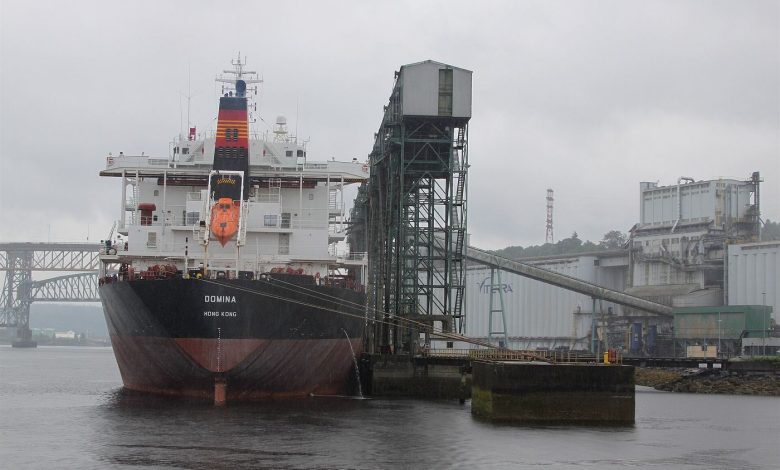
The bulk carriers queueing off the Danube and the greater Odesa ports tell a story of adaptation. Four harvests into a war that was supposed to strangle its farm exports, Ukraine has rebuilt its grain trade around a patchwork of routes: a maritime corridor hugging the western Black Sea coast, river ports that barely registered before 2022, and rail and road links into Poland and Romania that now carry a permanent share of the harvest.
A corridor that held
When the UN-brokered grain initiative collapsed, Kyiv established its own corridor, protected by coastal defences and routed through the territorial waters of Romania, Bulgaria and Türkiye. Insurers who initially quoted war-risk premiums that made voyages impossible gradually returned as the corridor’s record lengthened. Data published by the UN Food and Agriculture Organization shows export volumes through the sea route recovering to a substantial share of pre-war levels — a recovery few forecasters predicted when the first ships sailed.
The Danube cluster — Reni, Izmail and neighbouring Romanian facilities — became the system’s shock absorber, expanding capacity several-fold and handling barges around the clock when sea shipments paused. Our previous reporting on Ukraine’s wartime export economy described the engineers and logisticians behind that build-out.
Farmers plant through uncertainty
On the land, the adaptation is quieter. Farmers in front-line regions have shifted planting toward oilseeds that store and travel better, invested in on-farm storage to avoid selling at harvest-time lows, and joined export cooperatives that can fill a vessel without a multinational trader. Input shortages — fuel, fertiliser, labour — remain severe, and mined fields still take land out of production each season.
Why the world still watches the Black Sea
The costs remain punishing even where the routes work. War-risk insurance, longer rail journeys, transshipment at borders where Ukrainian and European track gauges differ — each adds dollars per tonne that competitors in Russia, Brazil or the US do not pay. Ukrainian grain therefore sells at a discount it has done nothing to deserve, squeezing farm margins that were thin in peacetime. Brussels and Kyiv argue periodically over the transit rules and the protection of EU farmers; the argument itself is a sign of normality returning, since grain that does not move cannot be argued over.
Forward contracts for the coming harvest are being signed at volumes that would have seemed reckless two years ago — the market’s way of voting that the routes, however improvised, have become dependable. Traders describe the new geography in the flat language of logistics: capacity, dwell time, demurrage. Behind each term is a structure built under fire by farmers, railway crews, port workers and insurers who each solved one piece. The corridor is less a single project than a habit now — and habits, once formed under pressure, tend to outlast the emergency that created them.
Ukraine’s harvests feed importers across North Africa, the Middle East and Asia, which is why wheat futures still jump on any corridor news. The new routes have not restored the old world; they have built a more expensive, more redundant one. For the farmers sowing this autumn, redundancy is not inefficiency. It is the whole point.