
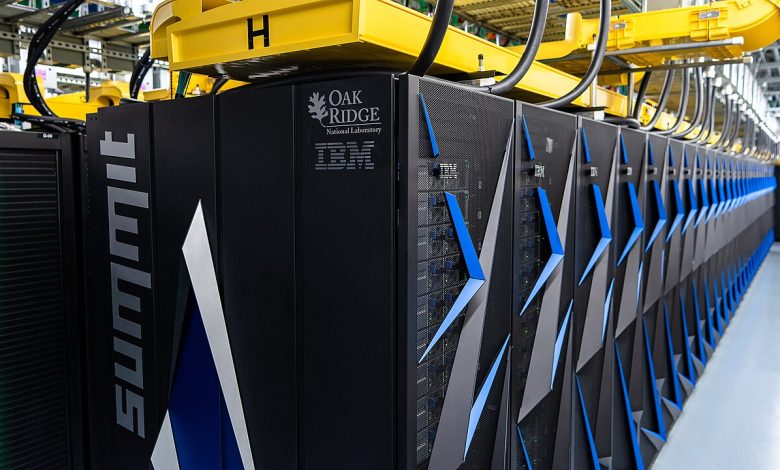
Europe’s first exascale supercomputer, JUPITER, installed at the Jülich Supercomputing Centre in Germany, has been used by NVIDIA researchers to run the largest comprehensive simulation of a fault-tolerant quantum computer yet attempted — modelling 104 qubits in full. The result is a milestone with two stories inside it: a classical machine of unprecedented scale, being used to design the quantum machines that may one day succeed it.
A Machine Built for Records
JUPITER is the first European system to cross the exascale threshold — more than a quintillion, or a billion billion, calculations per second. Built around NVIDIA’s accelerated computing platform and housed at Forschungszentrum Jülich, it was designed for the heaviest workloads in science: climate modelling, materials research, drug discovery, energy systems and artificial intelligence. Within months of coming online, it is already being pointed at one of the most demanding problems in computing — simulating quantum behaviour itself.
Simulating a quantum computer on a classical one is brutally expensive. Every additional qubit doubles the information needed to describe the system, which is why full simulations have historically stalled at far smaller sizes. Reaching 104 qubits with a comprehensive fault-tolerant model required exascale memory and processing working together — precisely the class of problem JUPITER was built to make possible.
Why Simulate a Quantum Computer?
Quantum computers promise dramatic speedups for certain problems, but today’s devices are noisy: their qubits make errors constantly. Fault-tolerant quantum computing is the discipline of correcting those errors faster than they accumulate, using many physical qubits to build each reliable, logical qubit. The catch is that designing and testing error-correction schemes requires knowing exactly how a large quantum system should behave — and that ground truth can only come from classical simulation.
Error correction needs a reference
By simulating a 104-qubit fault-tolerant system comprehensively, researchers can check whether their error-correction codes actually work at meaningful scale, measure how resources grow, and find weaknesses before they are baked into hardware. It is the quantum equivalent of a wind tunnel: you test the design in simulation, where failure is cheap and measurement is perfect, before committing to machines where both are expensive. Readers can follow further technology coverage on latestukrainenews.com as this research develops.
The work also sharpens a live scientific question — where exactly quantum advantage begins. Each time classical simulation pushes further, it raises the bar that quantum hardware must clear to prove it is doing something genuinely beyond classical reach. Far from making quantum computing pointless, these simulations map the border that quantum machines must cross, and they give hardware teams precise targets to aim at.
NVIDIA’s Bet on Both Sides
That NVIDIA researchers ran this simulation is its own signal. The company’s processors power both the classical supercomputers doing the simulating and much of the control and hybrid infrastructure around real quantum processors. Its strategy, visible in work described on NVIDIA’s site, treats quantum computing not as a replacement for classical supercomputing but as an accelerator that will sit beside it — quantum processing units working alongside GPUs and CPUs in the same facilities.
That hybrid vision is increasingly the industry consensus. The most plausible future supercomputing centre runs classical exascale machines for simulation and AI, with quantum processors attached for the specific problems — chemistry, optimisation, materials — where quantum effects offer leverage. JUPITER’s quantum simulation work is best read as groundwork for exactly that architecture: learning, at scale, how the two kinds of machine will cooperate.
Europe’s Computing Ambitions
JUPITER is also a geopolitical object. Europe has invested heavily through the EuroHPC programme to ensure it owns world-class computing capacity rather than renting it, and an exascale system on German soil, built with European research leadership, is the programme’s flagship achievement. Using it for frontier quantum research strengthens the case that the investment buys scientific leadership, not just hardware — the machine is producing results that laboratories worldwide will cite.
For Ukraine’s and Europe’s wider research communities, whose scientists collaborate across the continent’s computing networks, systems like JUPITER are shared infrastructure: time on them is allocated competitively to teams solving problems from fusion energy to pandemic preparedness. A record quantum simulation is a headline, but the deeper story is a continent building the tools to stay in the first rank of computational science.
The Classical Machines Are Not Standing Still
The result also underlines a point often lost in quantum hype: classical supercomputing is advancing ferociously at the same time. Exascale systems, paired with AI accelerators, keep extending what simulation can do — in quantum research, but equally in fusion modelling, weather prediction and molecular science. JUPITER’s early workload reflects that breadth. The same machine that simulates qubits in the morning can train scientific AI models in the afternoon, and that versatility is precisely why governments keep investing in general-purpose supercomputers even as specialised quantum hardware matures. The race, in reality, is not classical versus quantum; it is each generation of machines making the next one possible.
What Comes Next
The obvious next steps are scale and realism: larger simulations, more detailed noise models drawn from real quantum hardware, and error-correction schemes tested under conditions that match the messiness of physical devices. Each advance narrows the uncertainty around when fault-tolerant quantum computers will arrive and what they will need to look like.
There is a pleasing symmetry in the story. The most powerful classical computer in Europe has just spent its cycles imagining its own successor — carefully, qubit by qubit. Whatever timeline quantum computing ultimately follows, it will have been charted, in large part, by machines like JUPITER doing exactly this work.