
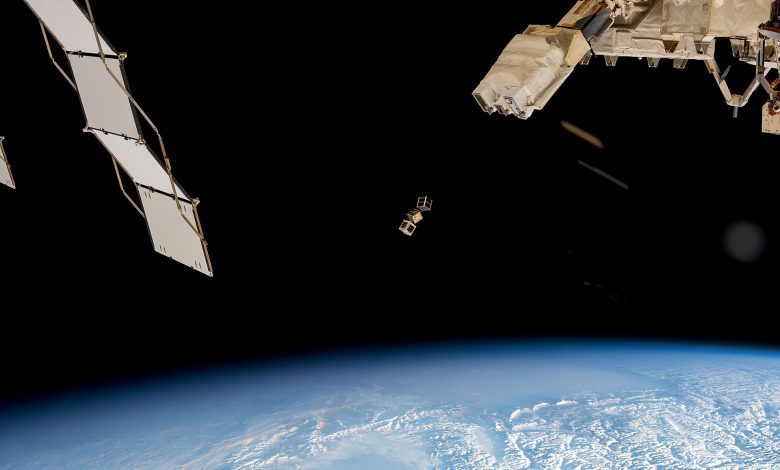
The data centre has left the planet. Google has revealed that a prototype satellite launched on October 1 booted one of its Tensor Processing Units in orbit and successfully ran a small AI model, returning a generated haiku as proof of life. The experiment, called Project Suncatcher, tests whether AI computing can one day be done in space.
Project Suncatcher: Why Compute in Orbit
The pitch is energy and scale. In orbit, solar panels harvest sunlight almost continuously, free of night, weather and land constraints, while space itself offers a vast heat sink for cooling. As terrestrial data centres strain power grids and face growing local opposition, technology companies are exploring increasingly exotic locations. Google has now scheduled the project’s next phase for 2027, when two satellites will test whether AI workloads can be distributed across multiple spacecraft, the orbital equivalent of a cluster.
A long road from haiku to hyperscale
Sceptics note the gap between the demonstration and a business. Radiation degrades chips, launches are expensive, bandwidth between orbit and ground is limited, and a failed server cannot be fixed by a technician with a screwdriver. The experiment belongs in the same category as other moonshot-scale computing stories, like the record quantum simulation run on an exascale supercomputer: less a product launch than a signal about where the industry’s imagination, and capital, is heading.
What was actually announced
The day’s verified announcements, including Suncatcher’s 2027 two-satellite phase and a string of model and platform releases from Microsoft, OpenAI and others, are catalogued in this daily record of AI announcements, which distinguishes confirmed launches from rumours.
Google’s experiment also lands in a policy vacuum that is starting to fill. Orbital data centres would raise questions no regulator has yet answered: which country’s rules govern a server in orbit, how debris and de-orbiting obligations apply to computing constellations, and who inspects hardware that no inspector can visit. Latency rules out many interactive uses, but batch workloads, model training and inference for space-based customers do not care about milliseconds. The nearer-term significance may be simpler: launch costs keep falling, power is the binding constraint on AI growth on Earth, and the industry’s largest players are now demonstrably willing to prototype their way around that constraint in the most literal direction available, up.
Project Suncatcher will not host anyone’s chatbot next year. But every computing era starts with an absurd demonstration that later looks obvious. Google has now run its silicon where no data centre has run before, and the race to define what that means is officially underway.