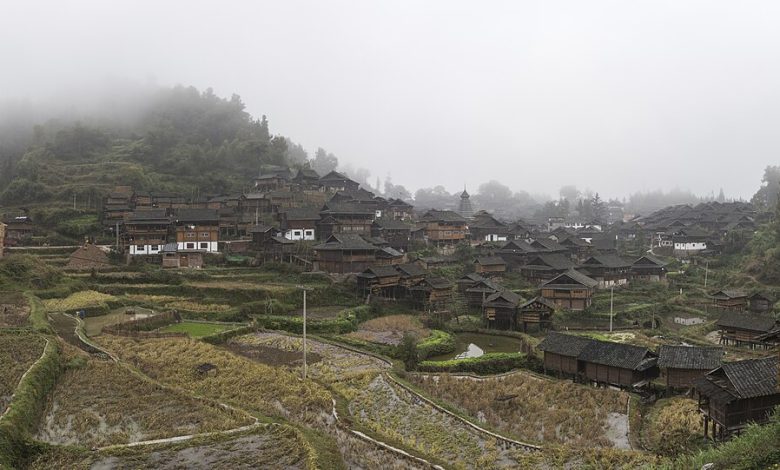
In Zhaoxing Dong Village in southwest China’s Guizhou Province, the day’s most important appointment is with a camera. Travellers are arriving in growing numbers to be photographed in traditional Dong ethnic attire against the village’s drum towers and terraced hillsides, creating a travel-photography boom that is generating local jobs and promoting a culture many visitors had never encountered.
Dressing up in Dong village
The model is simple and photogenic: rental studios dress visitors in embroidered Dong costumes, provide make-up and a photographer, and send them to the village’s most scenic corners. What began as a trickle of social-media posts has become a self-reinforcing attraction, as each portrait advertises the destination to the sitter’s followers. Similar costume-photography booms have swept historic towns across China, but Zhaoxing’s living Dong culture — its polyphonic singing, wooden architecture and festivals — gives the pictures unusual depth. The story surfaced in travel industry newswire coverage of regional tourism trends.
Jobs beyond the camera
A photography boom pulls a whole economy behind it: costume makers and rental shops, make-up artists, guides, guesthouses, restaurants and drivers. For a mountainous region like Guizhou, long among China’s poorer provinces, tourism built on cultural heritage offers income that does not require leaving home. Local participation is key — when residents own the studios and tell their own stories, tourism revenue and cultural pride reinforce each other rather than compete.
Zhaoxing is one of the largest Dong settlements in China, home to thousands of residents and five drum towers that anchor its social life. The Dong are renowned for their grand choirs, sung without instruments, and for indigo-dyed cloth and silverwork that feature prominently in the portraits visitors commission. Tourism planners in Guizhou have promoted the province’s ethnic villages as an alternative to China’s saturated mega-attractions, betting that travellers — especially younger ones — prize distinctiveness over scale. The photography model suits that bet perfectly: every visitor leaves carrying hundreds of advertisements for the village in their camera roll.
Heritage as a living asset
Cultural-heritage tourism works best when the culture is practised, not performed into extinction. Dong villages face the familiar tension between welcoming visitors and protecting daily life from becoming a stage set. Managed well, the income from photography can fund the preservation of the very crafts and buildings visitors come to see. Our pages explore heritage destinations in our blog section, where this balance between access and authenticity is a recurring theme.
A portrait in borrowed dress is a souvenir; the money it leaves behind, and the pride it can build, are the real picture. Zhaoxing’s boom shows heritage earning its keep by being itself.