
All-in-One Background Editors Ranked: Which Services Let You Personalize With Your Own Photos and Fonts

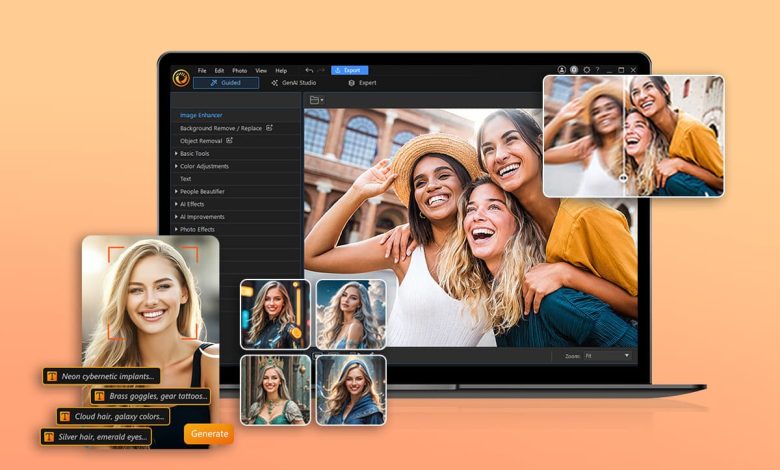
This article is for individuals, marketers, and small business owners who want to create personalized backgrounds that actually reflect their brand, aesthetic, or personality rather than relying on someone else’s stock image. Whether you are designing a custom Zoom background, a screensaver, a social media backdrop, or a presentation slide background, the tool you use determines how much creative control you actually have. By the end of this guide, you will understand what separates a truly capable all-in-one background editor from a limited one, and you will have a clear framework for choosing the service that best fits your specific needs.
What Makes an Editor Truly “All-in-One” for Background Creation
The phrase “all-in-one editor” gets used loosely in this space. Some tools that market themselves as complete background creators are really just template pickers with light editing layered on top. A genuine all-in-one editor for background creation does more than let you swap a color or drop in a stock image. It gives you end-to-end control over every visual layer: the imagery, the typography, the layout, the color treatment, and the final output format, all within a single interface.
This distinction matters because the alternative is stitching together multiple tools to accomplish what one good editor should handle. You might use one tool to find a stock photo, download it, upload it to a second tool to adjust the composition, add text in a third tool, and then export from a fourth. Each handoff introduces quality loss, formatting inconsistencies, and unnecessary time. An all-in-one editor eliminates those handoffs by keeping your entire creative workflow in one place.
The personalization dimension is equally important. A background built from a photo you took, displayed in a typeface that fits your visual identity, carries a specificity that no preset can match. The services worth evaluating are those that treat your personal assets as first-class inputs rather than optional add-ons.
Nine Criteria for Evaluating a Background Creation Editor
Not all tools in this category are built to the same standard. Use the following criteria to evaluate any service consistently before committing to it.
Font Library Depth and Flexibility
How many fonts does the tool offer, and are they licensed for the types of uses you have in mind? A broad font library matters because typography is one of the strongest personalization signals in background design. Look for tools that offer variety across categories: serif, sans-serif, display, script, and decorative. Also check whether the tool allows you to upload your own custom fonts if you have brand-specific typefaces you need to use.
Photo Upload and Integration
Can you upload your own photos directly into the editor, and does the tool integrate them cleanly with the rest of the design canvas? Some tools place uploaded images as flat backgrounds with no layering control. Better tools treat your photos as editable objects you can reposition, resize, mask, and layer alongside other design elements. Look for tools that support common formats including JPG, PNG, and for professional users, layered file formats like PSD.
Stock Image Access
For users who do not always have their own photography, built-in access to a stock image library removes a friction point. Evaluate both the size and quality of whatever stock library the tool offers, and note whether stock images are truly free to use or gated behind a paid tier.
Template Quality and Variety
Look for templates that are genuinely professional and varied, not just a handful of generic layouts. More importantly, evaluate whether the templates are fully editable down to every element, or whether certain parts are locked. A template you cannot fully customize is just a slightly prettier constraint.
AI-Assisted Design Features
An increasing number of background editors now include AI tools that can generate images from text prompts, apply effects to typography, or suggest design variations. Evaluate AI features critically. Output quality varies widely between platforms, and some AI tools produce results that require significant manual cleanup to be usable.
Canvas and Size Control
Does the editor let you set custom canvas dimensions, or are you locked into preset sizes? Background design requires different dimensions for different use cases: a desktop wallpaper, a mobile lock screen, a Zoom background, and a social media backdrop all have different aspect ratios. A tool that only offers fixed canvas sizes will force you to crop or scale outputs that do not quite fit your intended destination.
Device Compatibility and Sync
Can you access the tool and your saved work from both desktop and mobile devices? Evaluate whether the tool has dedicated mobile apps, whether mobile access feels like a full-featured experience or a stripped-down version, and whether designs sync reliably across devices.
Layering and Element Control
Does the tool give you genuine control over how design elements stack on top of each other? Background design often requires layering: a photo behind a color overlay, text on top of that, and a graphic element above the text. Drag-and-drop element control, adjustable opacity, and the ability to reorder layers are all signs of a more capable editor.
Export Quality and Format Options
What file formats can you export, and at what resolution? For backgrounds intended to display on high-resolution screens, you need at least 1080p output. Also evaluate whether the tool exports without watermarks on its free tier, since a watermarked background defeats the purpose of personalization.
Types of All-in-One Background Editors and How They Compare
Browser-Based General Design Editors
Browser-based general design editors are the most widely used tools in this category. They are built to handle a broad range of design tasks including backgrounds, social media graphics, presentations, and print materials. Their major advantage is accessibility: no installation is required, and they typically work on any device with a browser.
The strength of these tools for background creation lies in their template libraries and asset integration. Most offer thousands of templates across background categories, built-in stock photo access, and font libraries ranging from basic to extensive. Evaluating layer control specifically is important before committing to a browser-based tool for complex background designs, as the depth of editing control varies considerably between platforms.
Mobile-First Editing Apps
Mobile-first apps approach background creation from the perspective of touch-based workflows. They tend to prioritize gesture controls, quick exports, and templates optimized for phone screen dimensions. For users who primarily want to create mobile wallpapers, these apps often offer a more intuitive experience than trying to use a desktop-oriented editor on a small screen.
The limitation of mobile-first apps is that their font libraries and photo editing capabilities are often shallower than those of full-featured browser editors. These tools are well suited for straightforward personalization tasks but may fall short when a design requires multiple layers, specific brand typography, or professional-grade output quality.
AI-Powered Background Generators
AI background generators are best suited for users who want to create something visually unique without starting from scratch, but they come with limitations around predictability and control. For background creation that includes specific fonts or personalized text, AI-only tools are typically not the right choice, as most are focused on image output and do not include robust typography tools. They are better understood as a complement to a full-featured editor than as a replacement for one.
Adobe Express: A Strong Option Worth Evaluating
For users who want a genuinely capable all-in-one background editor that handles photo personalization, typography, and AI generation in the same interface, Adobe Express is worth a close look. The custom background creator gives you access to a range of starting points, from professionally designed templates to a blank canvas, and keeps the entire workflow in one place from upload to download.
Font Access at a Scale That Matters
With access to more than 18,000 licensed fonts from the Adobe Fonts library, the typography options go well beyond what most competing tools offer. The library spans every major type category, and the tool supports text effects including curved type, font pairs, and stylized typographic layouts that can function as visual elements rather than just labels.
Photo Integration Including Layered File Imports
Adobe Express accepts uploaded photos for direct canvas use, but it also supports PSD and Illustrator file imports with layer recognition. For users who already work in professional design software, this means you can bring existing work directly into Express and continue editing without flattening or reconstructing your layers.
AI Tools Built Into the Same Workflow
The platform includes AI-assisted features for generating images from text prompts, applying text effects, and adding or removing objects from images, all accessible within the same editor. This means you can generate a visual element, bring it into your composition, and layer your own photos and fonts on top of it without switching between tools.
Frequently Asked Questions
What is the difference between a background editor and a background generator?
A background editor is a tool that lets you build and arrange a design manually using your own inputs: photos, fonts, colors, shapes, and other visual elements. You control every decision. A background generator typically refers to an AI-powered tool that creates a background image from a text prompt. Generators are useful for producing visually original imagery quickly, but they do not give you the same direct control over typography and layout that an editor provides. For personalized backgrounds that need to incorporate specific photos and fonts, an editor is almost always the right choice. A generator might be useful as one step in a larger workflow, creating a base image that you then bring into an editor to add text and personal photos on top of.
How important is font licensing when choosing a background editor?
Font licensing is more important than most people realize, particularly for professional or commercial use. When a tool says it offers access to a font, that does not automatically mean you can use that font for any purpose without restriction. Some tools license fonts only for use within their platform and for personal downloads, which means the same font may not be available for print production, merchandise, or other commercial applications. Before using a font from any design tool for a purpose beyond a personal screensaver or internal presentation, check the tool’s font licensing terms. For users who want reliable access to free, commercially licensed fonts outside of any specific design platform, Google Fonts is a well-maintained library with clear open licensing documentation that can serve as a useful reference point when evaluating what a design tool’s font access actually covers.
Can I use my own photography as the primary visual element in a background design?
Yes, and for many users, personal photography is the most valuable input they can bring to a background design because it produces results that no template can replicate. The key variable is how well the tool you choose integrates uploaded photos into the broader design workflow. At a minimum, you want a tool that accepts high-resolution photo uploads and places them as editable objects on the canvas rather than simply replacing the background color. Better tools let you reposition, scale, mask, adjust opacity, and layer your photos alongside other elements. For best results, select photos with a visually quieter area, such as open sky, a plain wall, or soft bokeh, in any area where you plan to layer text or graphics on top.
What output resolution should I look for when creating backgrounds for screens?
The answer depends on where the background will be displayed. For a standard desktop or laptop screen, 1920 x 1080 pixels is the minimum recommended resolution. For higher-resolution displays including modern Retina screens, you will want at least 2560 x 1600 pixels, and for 4K monitors, 3840 x 2160 pixels is the standard. For mobile devices, most current smartphones display best with wallpapers at their native screen resolution, which typically falls between 1080 x 2340 and 1290 x 2796 pixels. Always check the export settings of any tool before building your design, because discovering a resolution ceiling after finishing a complex composition means potentially rebuilding it elsewhere.
How do I make sure a background I design looks cohesive rather than assembled from mismatched parts?
Cohesion in background design comes from a small number of shared visual decisions applied consistently across every element. The most effective approach is to anchor your design around a color palette of two to four colors drawn from your primary photo, then use those same colors for your font, any geometric shapes, overlays, or accent graphics. Most modern design editors include a color picker tool that lets you sample colors directly from an uploaded image. Typography cohesion comes from limiting your design to one or two fonts, ideally from the same type family or a suggested pairing. Finally, give your design visual breathing room. Overcrowding is the most common mistake in background design, and clear space around your key elements is what makes a composition feel intentional rather than busy.
Conclusion
Choosing an all-in-one editor for background creation comes down to how much genuine control the tool gives you over the two inputs that matter most: your photos and your fonts. Tools that treat these as primary design variables rather than optional additions will consistently produce more personalized and visually distinctive results than template-first platforms where everything is designed around a preset look.
For most users, a browser-based general design editor that offers deep font access, flexible photo integration, and AI-assisted generation within the same interface represents the strongest combination of capability and accessibility in this category. Adobe Express is one solid option in that evaluation, particularly for users who prioritize typography variety and want to incorporate layered file imports or AI generation into the same workflow. Whatever tool you choose, test it with your actual assets before committing to it for ongoing use. A tool that handles generic templates well may not perform as well with the specific inputs that make your background designs uniquely yours.